Compression Stockings Guide
A stocking on a shelf looks like a single product. Wearing one is really four decisions stacked together: how it gets sized, how much pressure it applies, how far up the leg it goes, and whether a clinician is involved in picking it. Each one commits you to something the packaging does not say.
The basic mechanism is not in dispute. The NHS says: "Compression stockings work by putting pressure on your lower legs." Cleveland Clinic says: "These squeeze your lower legs to improve circulation." The Society for Vascular Surgery says: "These stockings compress the veins and prevent blood from traveling down pooling in the legs."
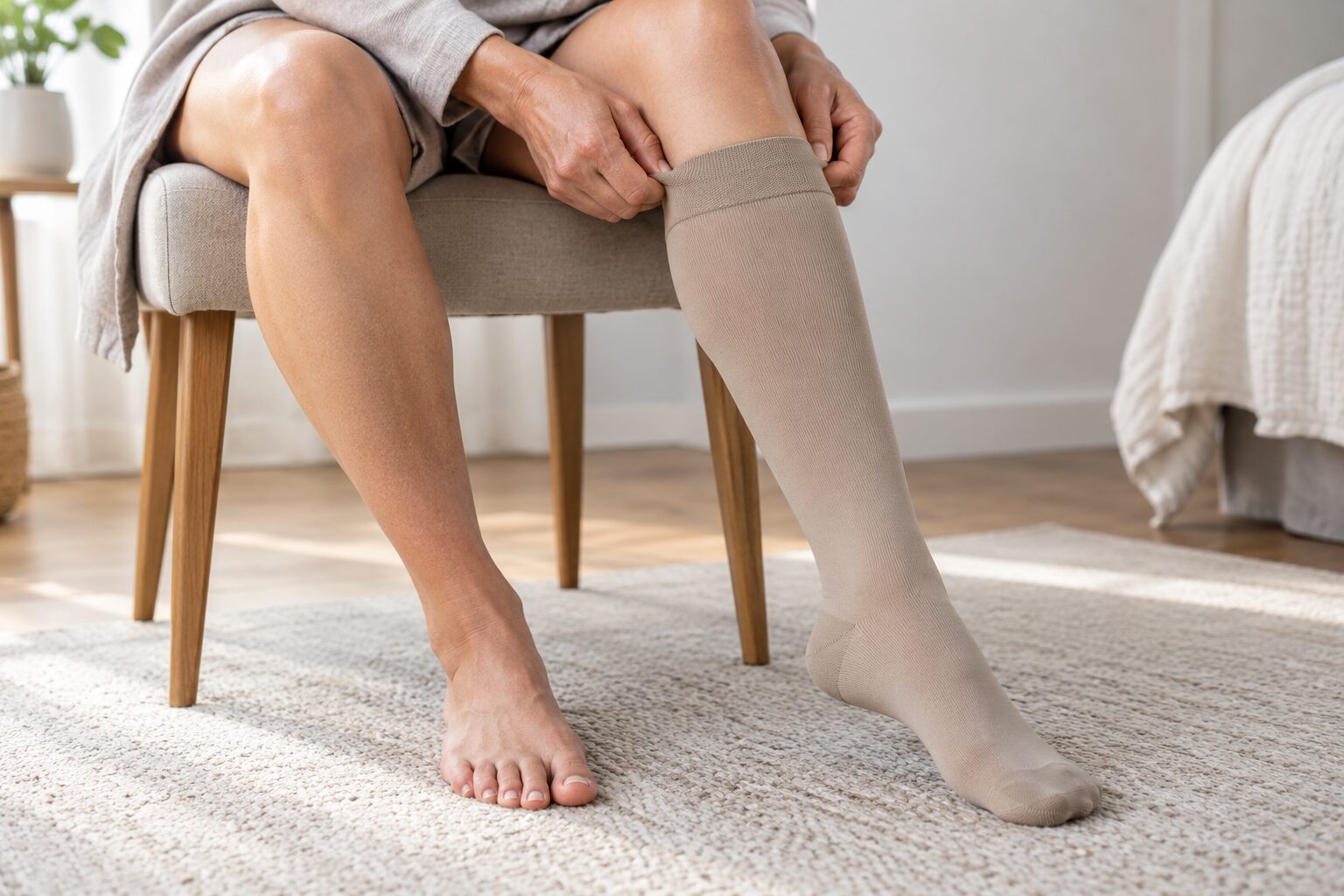
The four comparisons
Each note settles one trade-off and names the publisher behind it.
- Measuring Legs for Compression Stockings: who takes the measurements, and what a poor fit costs you.
- Understanding Compression Levels in mmHg: why the pressure number is a setting to match, not a score to maximize.
- Knee-High Versus Thigh-High Compression: how much leg you commit to covering.
- Prescription Versus Store-Bought Stockings: two routes to a similar product, and where they diverge.
Where the sources stop
Vein Directory offers the closest thing to a verdict: "Non-prescription compression stockings may be successful in relieving the symptoms of varicose veins, although prescription stockings are usually tighter and more effective." The wording is hedged twice, with "may" and "usually."
None of the publishers reviewed here prints a price for either route, or says how long you would wear them. A total-cost ranking from this desk would be a guess, so we do not offer one. Cleveland Clinic's page on post-thrombotic syndrome is a further read for readers who want the clot-related context, and the Vein Directory piece Compression Stockings: What You Need to Know is the broader overview.
Which note to open first
Not sure how to buy? Start with the prescription note. Already own a pair that pinches or slides? Start with the measuring note. In either case, take your questions to a clinician in Milford before you settle on a pressure level.